

Managing Home Electricity Bills & Urban Noise in Singapore: The 2026 Acoustic & Thermal Window Solutions Guide
August 7, 2026
BCA Window Safety Campaign & Inspection Guide 2026: Mandatory Maintenance, Repair vs. Replacement Checklist for Singapore Homes
August 11, 2026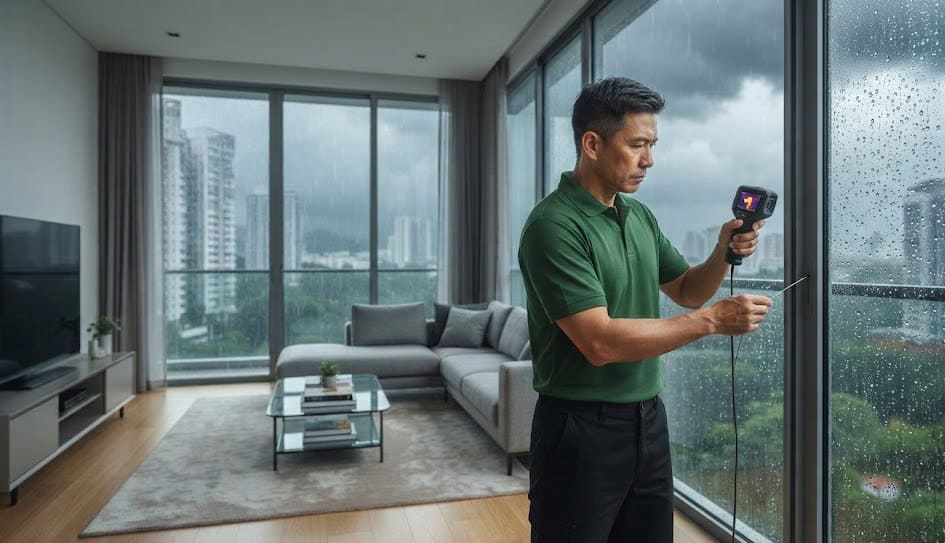
Tropical Climate Extremes: Monsoon Downpours & Rising Heat Indexes in Singapore
Living in high-density Singapore apartments exposes window systems to extreme environmental stress. Positioned just one degree north of the equator, the island experiences continuous high relative humidity ranging from 80% to 95%, intense solar ultraviolet radiation, and two distinct annual monsoon seasons. The Northeast Monsoon (November to March) brings prolonged heavy downpours and strong wind surges, while the Southwest Monsoon (June to September) triggers intense afternoon thunderstorms and sudden squalls. Inter-monsoon months bring severe solar heat gain, pushing ambient temperatures and indoor heat indexes to uncomfortable levels.
High-rise residential blocks across estates like Punggol, Marine Parade, Tampines, and Jurong face high wind pressure during monsoon storms. Wind-driven rain strikes building facades at acute angles, forcing water into microscopic cracks around window sills, degraded sealant joints, and unsealed masonry gaps. When combined with intense thermal expansion during hot dry months, aluminium window frames and glass panes expand and contract continuously. This thermal movement breaks perimeter seals, warps rubber gaskets, and turns minor installation flaws into major indoor water leaks.
Preventing water damage, damp drywall, timber floor warping, and sky-high air conditioning electricity bills requires a proactive weatherproofing strategy. Understanding how weather sealing, thermal films, and track drainage systems interact allows homeowners to maintain dry, energy-efficient indoor spaces year-round.
Diagnostic Guide: Spotting Window Leak Vulnerabilities Before the Monsoon
Water leaks rarely occur through solid glass; they originate along frame joints, perimeter sealant lines, worn rubber gaskets, and blocked drainage tracks. Conducting a systematic physical inspection before the monsoon season arrives helps pinpoint minor vulnerabilities before heavy downpours cause expensive damage inside your flat.
Inspect these four key vulnerability areas during your home weather audit:
- Perimeter Polyurethane & Silicone Sealant Joints: Examine the outer perimeter joint where the aluminium window frame meets the concrete wall. Over years of UV exposure and rainwater contact, standard acrylic or low-grade silicone sealants harden, shrink, chalk, and pull away from concrete lintels. Look for hairline gaps, peeling sealant strips, or dark water-stain tracks along inner window sills.
- EPDM Rubber Glazing Gaskets: Inspect the black rubber strips framing individual glass panes. Sun-baked rubber loses its elasticity, becoming brittle and shrinking at frame corners. When gaskets pull away, rainwater pooling against the glass drains straight into internal hollow aluminium profiles, eventually leaking into your living room.
- Sliding Window Track Weep Drainage Channels: Look closely at the bottom rail track of sliding windows. Manufacturers punch small rectangular slots (weep holes) along the outer track base to allow collected rainwater to drain outside. Construction dust, dead leaves, and trapped lint frequently clog these slots. When weep holes clog during heavy rain, water accumulates in the track, overflows the inner track lip, and floods bedroom floors.
- Frame Distortion & Corner Joint Separation: Inspect the mitred corners of aluminium casement and sliding sashes. Heavy wind pressure or loose corner cleats can cause frame corners to separate slightly. A gap as narrow as 0.5mm is wide enough to draw water inward through capillary action during high-wind storms.
| Protection System | Primary Function | Solar Heat Gain Coeff. (SHGC) | UV Rejection Rate | Water Ingress Resistance | Est. Longevity | Cost Profile |
|---|---|---|---|---|---|---|
| Nano-Ceramic Solar Film | Heat & UV Block | 0.28 – 0.38 | 99.5% | N/A (Interior Applied) | 8 – 12 Years | Moderate ($5 – $10 / sq ft) |
| Double-Glazed Units (IGU) | Heat, Sound & Leaks | 0.22 – 0.32 | 98.0% | High Waterproofing | 15 – 20 Years | High ($25 – $45 / sq ft) |
| Neutral-Cure Silicone Sealant | Perimeter Waterproofing | N/A | N/A | Complete Seal | 5 – 8 Years | Low ($15 – $25 / meter) |
| EPDM Rubber Weatherstripping | Gasket Waterproofing | N/A | N/A | High Elasticity | 7 – 10 Years | Low – Moderate |
| Standard Acrylic Caulk | Basic Interior Gap Fill | N/A | N/A | Poor (Shrinks/Cracks) | 1 – 2 Years | Low (DIY Grade) |
Thermal Protection: Lowering Indoor Heat Gain Without Frame Replacement
Unblocked solar radiation entering through large glass windows causes severe indoor heat buildup in West-facing and East-facing Singapore flats. Standard float glass allows up to 85% of solar thermal energy to pass directly into living spaces, raising indoor room temperatures, fading furniture fabrics, and forcing air conditioning compressor units to run continuously at maximum capacity.
While replacing single-pane windows with insulated double-glazed units (IGUs) delivers exceptional thermal insulation, full window frame replacement is costly and requires significant structural renovation. For most homeowners, applying high-performance window film installation provides an immediate, non-disruptive upgrade that lowers indoor heat gain without altering building frames or violating HDB facade rules.
Nano-Ceramic vs. Metallic Solar Film Technology
Modern solar films rely on advanced material science to reject infrared heat while allowing visible light to enter:
- Spectrally Selective Nano-Ceramic Films: Constructed using sputtered inorganic ceramic nanoparticles (such as antimony tin oxide or titanium nitride), ceramic films selectively block near-infrared heat rays (780nm to 2500nm) while maintaining high Visible Light Transmission (VLT). They do not create an intense exterior mirror reflection, ensuring full compliance with HDB and condominium management guidelines regarding facade reflectivity.
- Multi-Layer Sputtered Metallic Films: These films use microscopic layers of precious metals (like silver, gold, or aluminum) to reflect solar heat away from the glass. While highly effective at reducing heat, silver-dyed metallic films can impede mobile phone signals or GPS reception inside apartments and may exceed exterior reflectivity limits if selected in dark shades.
- Total Solar Energy Rejected (TSER) Ratings: When evaluating solar films, focus on TSER performance. Quality nano-ceramic films achieve TSER ratings between 55% and 72%, dropping surface glass temperatures by up to 8°C to 12°C during hot afternoon peaks. This thermal reduction lowers indoor air conditioning power consumption by up to 25% to 30%.
Structural Glass & Perimeter Seal Restoration for Monsoon Resistance
Water seepage around window openings is frequently misdiagnosed as leaking glass when the real culprit is degraded outer perimeter sealant. High-rise buildings move under wind loads and thermal changes. When perimeter sealants lose flexibility, microscopic separation gaps form between the aluminium sub-frame and surrounding concrete wall.
Resolving persistent water seepage requires executing professional glass replacement and repair techniques alongside outer perimeter seal restoration:
Polyurethane vs. Neutral-Cure Silicone Weather Sealants
Inexpensive acid-curing (acetoxy) silicones or water-based acrylic caulks should never be used on exterior window masonry joints. Acetoxy silicones release acetic acid during curing, which corrodes raw aluminium frames and chemically attacks alkaline concrete lintels. Furthermore, acrylic caulks dissolve when exposed to standing rainwater.
Professional weatherproofing requires industrial-grade neutral-cure silicone or high-modulus polyurethane sealants. Neutral-cure silicones adhere strongly to both non-porous glass/aluminium and porous concrete without releasing corrosive chemical byproducts. They retain up to 50% joint movement capability, allowing the sealant bead to stretch and compress during extreme thermal cycles without tearing away from masonry joints.
Step-by-Step Outer Joint Recaulking Protocol
Applying new sealant over old, cracked sealant is a temporary fix that fails within months. Correct recaulking follows a strict surface preparation protocol:
- Mechanical Stripping: Technicians completely strip away all hardened, degraded old sealant down to raw concrete and clean aluminium metal using specialized razor scraper tools.
- Solvent Degreasing: The joint cavity is thoroughly wiped with isopropyl alcohol or specialized degreasing solvents to eliminate airborne grease, algae spores, and chalky concrete dust.
- Backer Rod Insertion: A closed-cell polyethylene foam backer rod is inserted into deep joint gaps. The backer rod controls sealant depth and prevents three-sided joint adhesion, allowing the sealant bead to flex freely along two opposing bond surfaces.
- Tooling the Sealant Bead: Neutral-cure silicone sealant is injected into the joint using a pneumatic gun and tooled with a concave spatula, pressing the sealant firmly against joint sidewalls to eliminate air pockets and form a smooth water-shedding profile.
Weatherproofing Balcony Doors & Bi-Fold Systems Against Driving Rain
Balcony openings and patio accesses represent some of the most vulnerable water ingress zones in Singapore apartments. Wide-spanning glass door systems face direct exposure to heavy wind-driven rain during monsoon squalls. Traditional sliding doors or folding door systems with flush floor tracks can easily overflow when rainwater hits the glass surface faster than the bottom drainage channel can discharge water outward.
Achieving total weather resistance across wide patio openings requires specifying heavy-duty folding and bi-fold doors engineered with integrated drainage channels, multi-point compression locks, and high-performance perimeter weather-stripping:
Multi-Point Compression Locking & Dual EPDM Weatherstripping
Standard sliding doors rely on single-point center latches that pull door sashes together loosely. Under strong wind gusts, wind pressure flexes the door sashes apart, creating perimeter gaps through which driving rain penetrates. High-performance bi-fold doors incorporate multi-point shoot-bolt locking mechanisms operated by a single master handle. Turning the handle drives heavy stainless steel bolts simultaneously into top lintels and bottom floor tracks, locking the panels securely against the frame.
This tight compression compresses dual perimeter EPDM rubber bulb seals running along all vertical and horizontal sash edges. Dual EPDM weather-stripping creates a double-barrier air chamber that halts wind-driven rain penetration even under gusting wind conditions exceeding 60 km/h.
Sub-Fin Sill Drainage Channels & Weathered Thresholds
In modern apartment layouts where homeowners desire seamless indoor-to-outdoor transitions, flush bottom tracks are often installed level with living room flooring. However, a completely flat floor track offers zero resistance against rising water during severe downpours. To maintain weatherproofing, modern bi-fold door installations utilize specialized weathered sub-fin thresholds or concealed stepped tracks:
- Stepped Weathered Thresholds: A raised internal lip (minimum 15mm to 25mm step) acts as a mechanical dam, preventing pooling rainwater on the balcony deck from washing inward under wind pressure.
- Concealed Drainage Sub-Channels: The bottom aluminium track features an internal sloped catchment tray equipped with high-volume one-way flap drainage valves. Rainwater running down the glass panel drains into the sub-channel tray and flows outward through weep outlets, while the one-way flap valves prevent gusting winds from forcing water backward through the drain holes.
- Perimeter Nylon Brush Seals: Heavy-duty nylon brush strips installed at panel intersections sweep dirt and leaves clear of the track during door operation, ensuring drainage slots remain unblocked throughout the monsoon season.
Corrosion Mitigation for Aluminium Frames, Gates, and Outer Fittings
High relative humidity combined with airborne marine salt aerosol creates an aggressive corrosive environment across coastal Singapore estates like Marine Parade, East Coast, Telok Blangah, Pasir Ris, and Punggol. Airborne salt particles settle on aluminium window frames, wrought iron gates, and stainless steel fittings, triggering localized pitting corrosion and coating breakdown.
Preventing metallic corrosion and structural deterioration requires understanding protective surface treatments and material selection:
Anodized vs. Qualicoat Powder-Coated Finishes
Bare aluminium rapidly forms a thin natural oxide layer, but this layer breaks down when exposed to salt spray and standing moisture. High-grade window frames and security gates utilize specialized factory surface finishes to ensure long-term durability:
- Architectural Anodizing (25-Micron Grade): Anodizing electrochemically thickens the natural oxide layer, fusing it directly into the aluminium substrate. Grade AA25 anodized finishes offer exceptional hardness and corrosion resistance, making them ideal for coastal properties exposed to salt air.
- Qualicoat Class 2 Architectural Powder Coating: Thermosetting polyester powders applied electrostatically and baked at 200°C create a thick, flexible polymer shield (60 to 80 microns thick) over metal frames. Powder coating resists chalking, UV fading, and scratching, providing a smooth finish available in customized matte, satin, or textured colors matching estate guidelines.
Upgrading Fasteners to 316 Stainless Steel & Galvanic Isolation
When dissimilar metals touch in the presence of moisture (such as steel screws installed inside aluminium frames), galvanic corrosion occurs. The less noble metal (aluminium) corrodes rapidly around the screw hole, loosening hinges and causing frame sag. To prevent galvanic failure, installers use 316 marine-grade stainless steel fasteners fitted with non-conductive nylon isolation washers or anti-seize barrier compounds. This prevents direct metal-to-metal contact and halts electrochemical corrosion.
HDB & BCA Weatherproofing Compliance Checklist for Homeowners:
• Sealant Inspection: Inspect outer perimeter window silicone joints every 3 to 5 years for cracking, peeling, or water staining.
• Drainage Weep Clearance: Clear all sliding track weep holes of dirt, leaves, and lint before the start of the Northeast Monsoon in November.
• HDB Facade Compliance: Ensure any exterior-facing weatherproofing, solar film application, or frame replacement matches the estate’s approved color and reflectivity limits.
• Hardware Fasteners: Verify that replacement screws, friction stay hinges, and rivets are made of 316 marine-grade or 304 stainless steel to resist tropical corrosion.
Step-by-Step Tropical Home Weatherproofing Audit Timeline
Preparing your home for extreme seasonal weather requires executing targeted maintenance tasks before weather changes occur. Follow this bi-annual weatherproofing schedule to protect your apartment against monsoon rain damage and summer solar heat gain:
- Pre-Monsoon Audit (October / November – Before Northeast Monsoon)
Conduct a comprehensive water-seal audit across all windows, service yards, and balcony doors. Clean sliding track drainage weep slots with a small stiff brush and vacuum out trapped debris. Inspect outer perimeter silicone joints for shrinkage. Test multi-point compression latches on bi-fold balcony doors, replacing worn EPDM rubber weather-strips to prepare for heavy wind-driven rain. - Mid-Monsoon Check (January – Peak Downpour Season)
Inspect interior window sills, wall plaster, and floor skirtings right after severe rainstorms. Check for damp spots, bubbling paint, or standing water inside sliding tracks. If water accumulates in tracks without draining outward, clear clogged weep outlets immediately. - Pre-Summer Heat Audit (March / April – Before High Solar Heat Period)
Inspect window glass panels and internal window coverings for thermal degradation. Check installed solar window films for bubbling, edge peeling, or purple discoloration indicating UV dye breakdown. Clean glass surfaces thoroughly to ensure maximum solar heat reflection and optical clarity during peak heat index months. - Post-Summer Maintenance (August / September)
Check casement friction stay hinges and sliding window rollers for thermal distortion or dry friction squeaks. Apply dry silicone lubricant spray along friction stay sliding channels and track rails to preserve smooth operation through the upcoming monsoon season.
Frequently Asked Questions on Home Weatherproofing & Window Leaks
How do I stop sliding window track water from overflowing onto my bedroom floor during monsoon storms?
Track overflows occur when bottom weep drainage slots are blocked by dust, lint, or dead insects. Use a narrow vacuum attachment or small wire probe to clear all weep holes along the outer base of the sliding track. If weep slots are clear but water still overflows, inspect the outer perimeter silicone joint for leaks or install higher internal track baffle strips to raise the overflow barrier height.
Can solar window film be legally installed on HDB windows without approval?
Yes, solar window films can be installed on internal glass surfaces of HDB windows without formal written renovation permits, provided the film conforms to HDB facade guidelines. The film must not exceed maximum reflectivity limits (avoiding mirror-like silver exterior reflections) or drastically alter the uniform appearance of the building facade from the outside precinct.
What causes interior glass condensation (“sweating”) on my windows in Singapore?
Glass condensation occurs when warm, humid indoor air comes into contact with glass cooled by air conditioning. Water vapor in the air condenses into droplets on the cold glass surface. Applying high-performance nano-ceramic solar film or upgrading to double-glazed units increases thermal resistance, raising the glass surface temperature above the dew point to reduce surface condensation.
Is it better to repair perimeter window sealant from the inside or the outside of a high-rise flat?
To halt water ingress effectively, perimeter weather sealant must be applied along the exterior joint where the aluminium frame meets the outer concrete wall. Applying sealant only from the inside traps water within the wall cavity, leading to internal concrete degradation and dampness behind wallpaper or paint. High-rise exterior recaulking should be executed by certified specialists trained in rope access or safety scaffolding.
How do I maintain bi-fold balcony doors so tracks glide smoothly and drain water?
Vacuum bottom guide tracks monthly to remove sand, pet hair, and dirt that cause roller wheels to jump. Spray dry silicone lubricant along track channels every six months to protect rollers. Ensure the outer drainage flap valves remain free of debris so pooled rainwater discharges quickly during heavy storms.
Protect Your Home Against Tropical Weather Extremes Today
Safeguarding your home against Singapore’s intense weather demands proactive weatherproofing. Addressing perimeter sealant degradation, clearing track drainage channels, and applying spectrally selective solar window films protects your interior against monsoon water damage and cuts air conditioning electricity expenses during hot dry spells.
Whether you need professional outer perimeter joint recaulking, high-rejection solar window film installation, or weather-resistant bi-fold balcony door replacements, partnering with experienced technicians ensures long-lasting protection tailored to high-rise living.
Do not wait for the next heavy monsoon storm or record heatwave to uncover window vulnerabilities. Contact our BCA-registered technical team today to schedule an on-site window weatherproofing assessment, thermal leakage audit, and professional restoration service for your home.

